
A quiet craft,
practiced by the water.
Northbank is four square miles of still water tucked between fell and forest. For nearly a century, the same family has kept it — first as a working estate, now as a place for visitors who come to fish slowly, quietly, and with care.
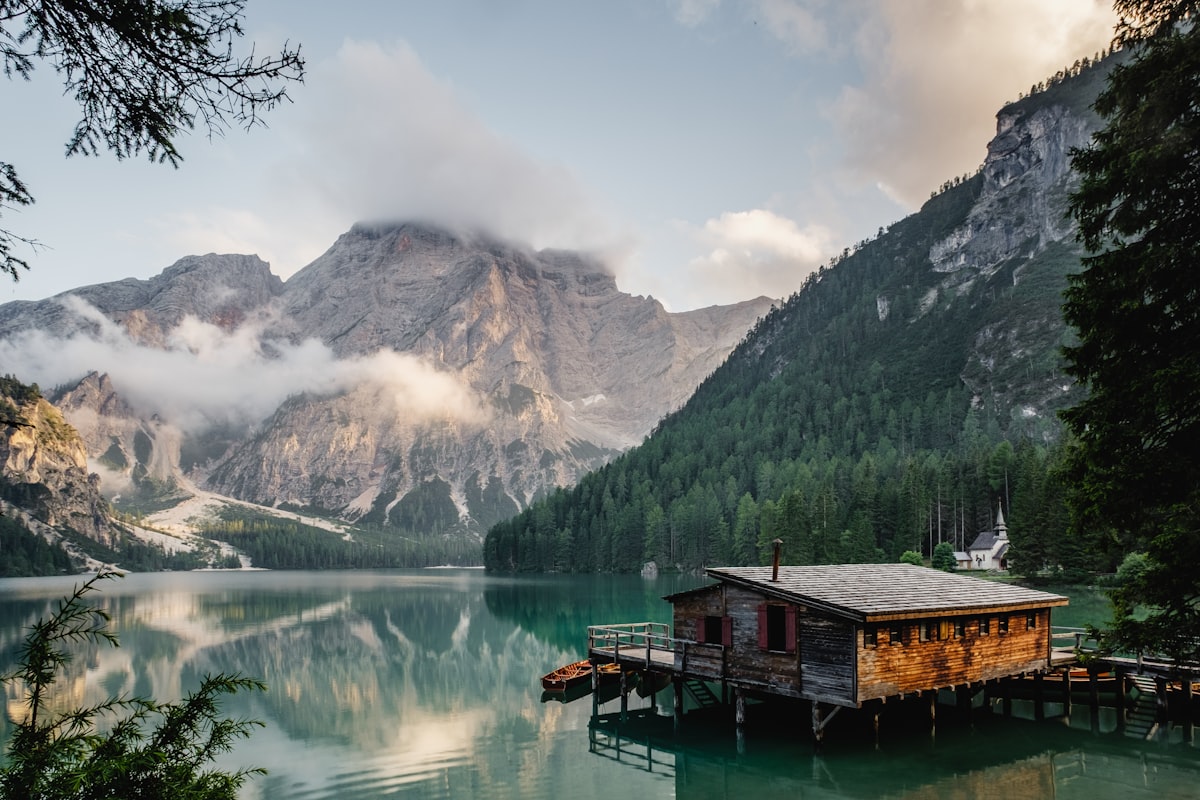
Four generations. One family. One lake.
A working lake that learned to listen.
In 1927, Thomas Northbank — a timber merchant from the Solway coast — acquired what the tithe maps called Mere Beck and set about building a modest wooden boathouse on its north shore. It was meant as a weekend concern; it became the family’s slow, accidental life’s work.
His granddaughter began managing the lake in 1982 and quietly changed everything: catch-and-release on every fish, native stocking programmes, and a deliberate policy of keeping the numbers of rods a day small enough that the water itself would not notice them. The rule has held through three keepers since.
Today, Northbank sits inside a small ecosystem we have spent forty years learning not to disturb. The fish are older than they used to be. The herons are more frequent. The lake looks, in most lights, almost exactly the way it did the morning Thomas first bought it — which is the outcome we are quietly proudest of.
What the catch book remembers.
Milestones kept by hand, in ledgers and keepers’ notebooks, since the first season.
The lake is bought
Thomas Northbank acquires “Black Meer” from the Dalby estate for £1,240. The first boathouse is built from local larch.
First keeper appointed
Henry Woodthorpe arrives from the Tyne. He maps the lake bed and names the three main bays after his daughters.
The gates open
Eleanor inherits the lake. She opens it to paying visitors and writes the keeper’s rules. First recorded guest: Reverend Greaves.
Brown trout restored
Native wild brown trout reintroduced after a decade of restocking. Pike levels balanced through careful intervention.
Catch-and-release policy
Every fish caught on the lake is returned. The catch book becomes a record of living fish, not dead ones.
Dark-sky reserve status
Northbank joins the Eden Valley Dark Sky initiative. No new lights installed around the water after dusk.
River restoration
Three miles of the Mere Beck restored. Kingfishers return after a nineteen-year absence.
Seventeen species,
one unhurried water.
Every fish at Northbank is returned. Every guest becomes, for a morning, part of the water’s quiet arithmetic.
Wild brown trout
Salmo trutta. Native population restored in 1981. Average weight 2–4 lb.
Northern pike
Esox lucius. Balanced through selective management. Some specimens exceed 20 lb.
Grey heron
Resident pair nests in the north reed beds. Seen at dawn on the shallows.
Kingfisher
Returned in 2023 after 19 years. Two confirmed breeding pairs along Mere Beck.
European otter
A family of five monitored since 2019. Regular tracks at the eastern inlet.
Mayfly hatch
Ephemera danica. The “Duffer’s Fortnight” peaks in late May — legendary dry-fly water.
The lake keeps its own calendar.
Seasons here are not a marketing framework — they are how the water moves, what it holds, and when you come to meet it.
Spring
Mar – MayThe beck runs clear again. Mayfly hatch peaks in late May. First dry-fly sessions of the year.
Summer
Jun – AugDawn sessions at their most productive. The lake settles by mid-morning — guests linger over books on the jetty.
Autumn
Sep – NovPike season begins. Mist rises off the water each morning. Private-guide bookings take over.
Winter
Dec – FebClosed to guests. Keepers restore the banks, repair the huts, and count starling roosts at dusk.
Leaving the water better than we found it.
Stewardship at Northbank is unglamorous and slow. It is the reason the fish, herons, otters and mayfly all return each spring.
Read the keeper’s journal →Three river-miles restored
Since 2014 we have rewetted, re-meandered, and replanted three miles of inflow becks. The kingfishers came back first.
No clearance without reason
We do not manicure the banks. Brambles, nettles, and fallen larch stay — because otters, warblers, and dragonflies need them.
Dark-sky protected
No new lighting installed within 400 metres of the water. Guests are given a storm lamp and asked to leave the stars alone.
Catch & release, always
Every fish returned. Barbless hooks only. Our catch book records the living, not the kept.
Off the A6, down a road most maps forget.
Northbank sits at the edge of the Eden Valley, forty minutes from Penrith and ninety from the M6. The last three miles are unpaved — the road narrows, and the lake reveals itself only at the final turn.
Cumbria CA10 2PX

Some lakes belong to everyone. Northbank belongs to no one. You are simply allowed to stand beside it for a while, and — if you are quiet enough — to feel it let you.

A morning here stays with you for a long while after.
We keep numbers low on purpose — usually no more than six rods a day. Booking well ahead is the kind thing to do.